Marketing
SEO vs Google Ads in 2026: Which Marketing Channel Is Better?
Discover why SEO and Google Ads should no longer be treated as competing channels in 2026. Learn how AI Search, changing user behavior, and modern digital marketing strategies are reshaping the way companies build visibility and attract customers.
SEO vs Google Ads in 2026: Which Marketing Channel Is Better?
In the world of digital marketing, one question has been asked for years: SEO or Google Ads — which strategy is better?
Companies have compared these two channels as if they were direct competitors. One side argued that SEO provides free, long-term traffic. The other pointed out that Google Ads delivers immediate results and full control over campaigns.
However, in 2026, this question is no longer relevant.
The reason is simple — the way users search for information has completely changed.
Google Search is no longer just a list of blue links. Increasingly, users receive a ready-made answer before ever visiting a website. The growth of AI Overviews, conversational search, and AI-powered tools has changed the competition. The battle is no longer only about getting a click.
Today, companies compete for something much more important:
being present at the moment when a customer makes a decision.
SEO and Google Ads should not be treated as alternatives. They are elements of one marketing system that helps build visibility, trust, and revenue.
Why SEO vs Google Ads is the wrong question in 2026
The traditional approach was very simple:
SEO generates free organic traffic,
Google Ads buys visibility,
a company chooses one channel and invests its budget.
This model worked for many years.
The problem is that search has become much more complex.
Today, users can discover a brand through:
traditional Google search results,
Google Ads,
AI Overviews,
ChatGPT and other AI tools,
YouTube,
social media,
recommendations from other users,
industry reviews and rankings.
Search is no longer a single channel.
It is user behavior that happens across multiple platforms at the same time.
In 2026, the biggest advantage is gained by companies that do not compete only for clicks, but build brand visibility throughout the entire customer decision journey.
The end of simple Google traffic
For years, the main goal of SEO was achieving the first position in search results.
The logic was simple:
a user enters a query,
Google displays results,
the user clicks a website,
the company gains a potential customer.
However, this process now looks different.
Google increasingly answers users directly.
For example:
A user searches:
"what company creates the best websites for law firms?"
A few years ago, they would probably click several results and compare offers themselves.
Today, they may receive a ready-made AI-generated summary that highlights several recommended solutions.
This means that ranking in Google does not always directly translate into traffic anymore.
Zero-click search is changing the rules
One of the biggest trends of recent years is the growth of zero-click searches.
This happens when users find an answer without visiting any website.
This is driven by:
featured snippets,
Google Knowledge Panel,
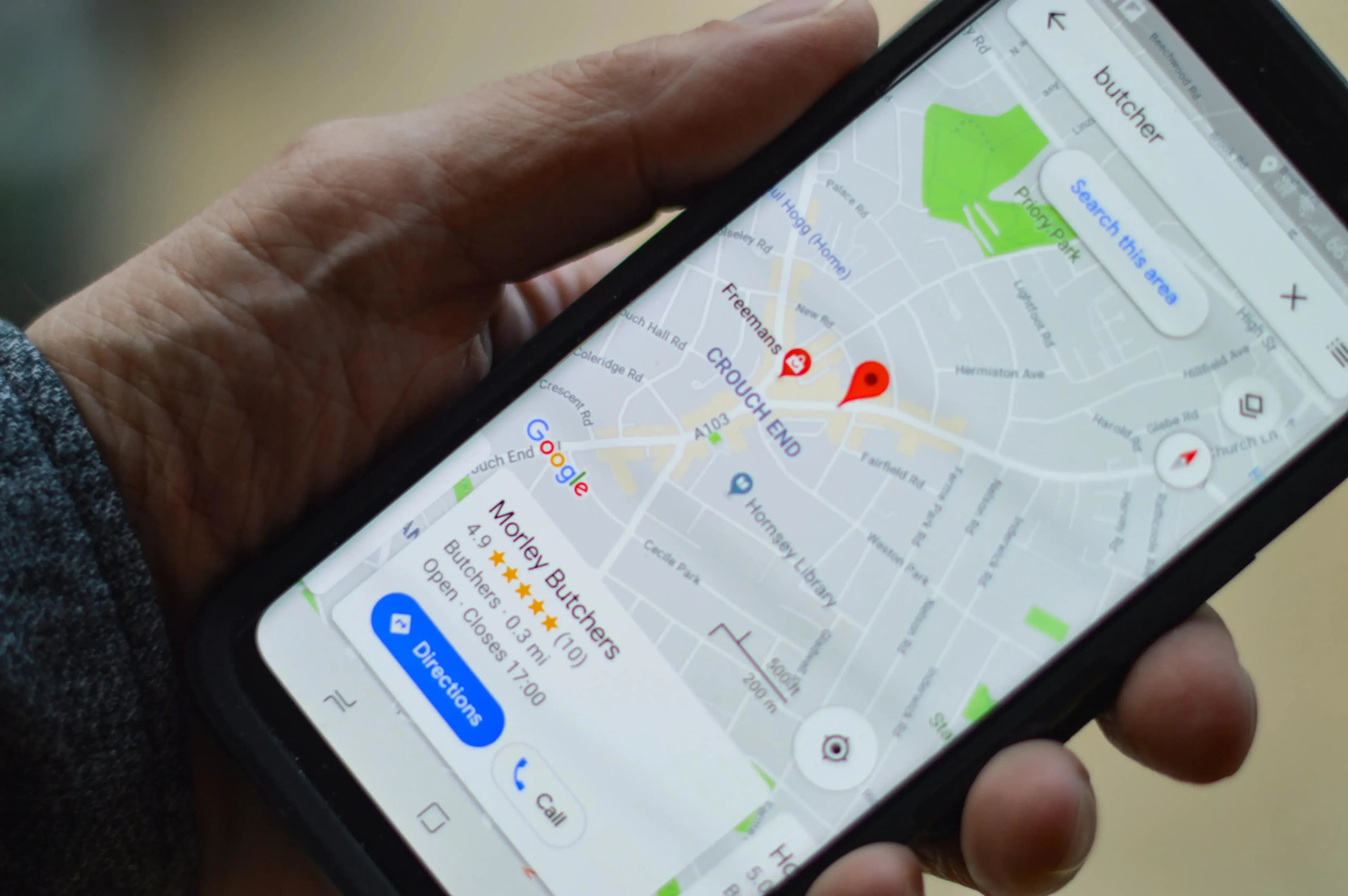
Google Maps,
calculators,
AI answers,
generative search results.
For companies, this represents an important shift.
Previously, the goal was:
"How can we get more clicks?"
Today, the more important question is:
"How can we make users see our brand as the best choice?"
Clicks are still valuable, but they are no longer the only measurement of success.
Visibility, authority, and presence in AI-generated answers also influence purchasing decisions.
How AI changed SEO and Google Ads
Artificial intelligence has not replaced SEO or advertising.
However, it has changed how both channels work.
AI systems use information available online to generate answers. This means companies need to focus even more on:
content quality,
brand authority,
information structure,
user experience,
technical website quality.
SEO has become a foundation not only for Google, but also for AI systems.
Strong optimization helps algorithms understand:
what a company does,
what problems it solves,
who its offer is designed for,
why users should trust it.
Google Ads is also evolving.
Campaign automation, smart bidding strategies, and AI-powered solutions mean that advertising systems increasingly analyze:
website content,
user behavior,
search intent,
probability of conversion.
The line between SEO and PPC is becoming increasingly blurred.
SEO — the long-term foundation of visibility
SEO (Search Engine Optimization) focuses on optimizing a website to increase its visibility in organic search results.
In practice, it includes:
creating valuable content,
technical website optimization,
improving website speed,
building domain authority,
keyword research,
improving user experience.
The biggest advantage of SEO is the ability to build a long-term marketing asset.
A well-created article, landing page, or service page can generate traffic for many months or even years.
The biggest advantages of SEO
Long-term impact
Unlike paid advertising, SEO does not stop immediately when the budget is turned off.
A company invests in website structure, content, and authority that continue creating value over time.
Building trust
Users often perceive organic results as more trustworthy than advertisements.
Strong search visibility can improve:
brand recognition,
expertise,
customer trust.
Reaching users across the buying journey
Not every customer is ready to purchase immediately.
SEO allows companies to reach users at different stages:
searching for information,
comparing solutions,
preparing to buy.
SEO limitations
SEO is not a fast sales channel.
The biggest challenges include:
time requirements,
strong competition,
algorithm changes,
need for continuous optimization.
In many industries, significant results appear only after several months.
That is why SEO works best as a strategic investment rather than a one-time campaign.
Google Ads — speed and control
Google Ads works according to a completely different model.
A company pays for the opportunity to appear in front of users who are actively searching for a specific solution.
Example:
A user searches:
"website design company in Wroclaw"
This person has strong purchase intent.
With Google Ads, a company can immediately appear at the top of search results.
The biggest advantages of Google Ads
Immediate visibility
The biggest advantage of paid advertising is speed.
A campaign can start generating traffic almost immediately after launch.
Precise targeting
Google Ads allows companies to control:
keywords,
location,
device,
audience,
budget,
advertising schedule.
Easy performance analysis
Unlike many marketing activities, advertising provides very fast data:
how many people clicked,
how much a conversion cost,
which keywords generate sales.
SEO and Google Ads serve different purposes
The biggest mistake companies make is treating SEO and Google Ads as replacements for each other.
They are two different tools.
Element | SEO | Google Ads |
|---|---|---|
Goal | Building long-term visibility | Generating traffic quickly |
Results | Months | Immediate |
Cost | Investment in growth | Payment per click |
Scaling | Slower | Faster |
Sustainability | Long-term | Ends when budget stops |
Summary of Part One
In 2026, the question "SEO or Google Ads?" is too simplified.
SEO builds the foundation.
Google Ads allows companies to capture existing demand faster.
The biggest advantage comes from companies that understand these channels do not compete with each other — they work together to create a customer acquisition system.
In the next part, we will analyze in detail when it makes sense to invest in SEO, when to use Google Ads, and how to choose the right strategy for a specific business.
SEO vs Google Ads in 2026: when should you choose a specific marketing channel?
In the first part of the article, we showed why the classic comparison of SEO and Google Ads as two competing channels is no longer relevant.
However, SEO and paid advertising solve different business problems.
One strategy helps build long-term competitive advantage and increase brand visibility. The other allows businesses to instantly reach users who are already actively searching for a specific solution.
That is why the right question is not:
"SEO or Google Ads?"
A better question is:
"Which channel best matches the current stage of my business growth?"
A new company that is just building awareness will need a different approach than a brand with an established market position.
Similarly, a local service provider, law firm, e-commerce store, or technology company will have completely different marketing needs.
When is SEO the better choice?
SEO works best when a company wants to build a sustainable customer acquisition channel.
It is particularly effective for businesses that:
have a long buying cycle,
sell services that require trust,
want to build authority,
operate in competitive industries,
plan long-term growth.
For example:
A law firm does not sell its services in the same way as an electronics store.
A client usually does not choose a lawyer after a single interaction. First, they:
search for information,
check experience,
compare specializations,
read reviews,
build trust.
In this case, SEO allows a company to be present throughout the entire decision-making process.
SEO as an investment in a company asset
One of the biggest values of SEO is the fact that it creates a marketing asset.
Advertising works as long as you continue paying.
If a company stops its Google Ads campaigns, visibility disappears almost immediately.
SEO works differently.
A well-prepared service page, expert article, or guide can generate:
traffic,
inquiries,
sales,
brand awareness,
for many months after publication.
Of course, it requires continuous optimization, but the results accumulate over time.
SEO works similarly to building a business reputation offline. The longer you invest in quality, the greater advantage you can build over competitors.
SEO works especially well in expert-driven industries
Some industries naturally benefit more from SEO than from paid advertising.
Examples:
software houses,
consulting companies,
marketing agencies,
law firms,
B2B companies,
architects,
technology companies,
manufacturers of specialized products.
Why?
Because purchasing decisions often require education.
A potential customer usually does not search directly for:
"buy a service".
More often, they search for:
"how much does it cost to build an application",
"how to choose a software house",
"how long does it take to build an online store",
"how to improve website conversion rates".
A company that answers these questions starts being perceived as an expert.
When is Google Ads the better choice?
Google Ads has the biggest advantage when speed matters.
If a company needs:
new customers in a short time,
quick offer validation,
immediate sales growth,
promotion of a specific service,
paid advertising can be the best solution.
Example:
A new company offering home renovation services starts operating.
It does not yet have:
domain authority,
reviews,
SEO content,
Google rankings.
Waiting several months for SEO results may be a problem.
Google Ads allows the company to immediately appear in front of people who are already looking for a contractor.
Google Ads captures existing demand
The biggest strength of advertising is the ability to reach users with strong purchase intent.
There is a huge difference between:
"how to design a website"
and:
"website design company price"
The first person is probably still researching.
The second person may already be looking for a provider.
Google Ads allows businesses to buy visibility exactly at these moments.
The biggest advantages of Google Ads
Fast market testing
One of the biggest advantages of advertising is the ability to validate ideas quickly.
A company can test:
which messages work,
which services attract interest,
which customer groups convert best.
This is especially important for new products.
Instead of spending months creating content without certainty, businesses can gather data much faster.
Full budget control
Google Ads allows very precise spending management.
A company can define:
daily limits,
maximum cost per click,
location targeting,
advertising hours,
specific search queries.
This allows campaigns to scale according to actual performance.
Ability to scale sales
If a campaign generates customers with a positive return on investment, the budget can be increased.
Example:
A company spends 5,000 PLN per month on advertising.
It generates 20,000 PLN in sales from these campaigns.
If margins allow further scaling, increasing the budget can directly increase revenue.
The biggest mistakes when investing in SEO
SEO is highly effective, but many companies use it incorrectly.
Mistake 1: Creating content without a strategy
Simply publishing articles is not SEO.
Common problems:
publishing random content,
choosing keywords without analysis,
failing to answer real customer needs.
A good SEO strategy starts with understanding:
who the customer is,
what they are searching for,
what problems they have,
what questions lead to a purchase.
Mistake 2: Focusing only on rankings
The first position in Google does not always mean success.
What matters is:
traffic quality,
number of inquiries,
sales,
customer acquisition cost.
A company can have thousands of visitors every month and zero customers.
That is why SEO must be combined with:
good UX,
a strong offer,
conversion optimization.
Mistake 3: Ignoring the website itself
SEO does not work separately from the website.
If users land on a website that:
loads slowly,
does not build trust,
has an unclear offer,
lacks proper CTAs,
even the best traffic will not translate into sales.
The biggest mistakes when investing in Google Ads
Mistake 1: Sending traffic to a weak website
The most common problem with advertising campaigns:
a company pays for clicks, but the website does not convert.
Example:
A user searches:
"e-commerce website design"
The click leads to a generic homepage where the user has to find the right service themselves.
The result:
low conversion rates,
high acquisition costs,
wasted budget.
Mistake 2: Optimizing only for clicks
A high number of clicks does not mean success.
The most important questions are:
how many users submitted an inquiry?
how many became customers?
what was the acquisition cost?
A campaign should be evaluated through a business perspective, not only advertising statistics.
Mistake 3: Lack of testing
Effective Google Ads campaigns require continuous improvement of:
ad copy,
landing pages,
audiences,
keywords,
offers.
A campaign launched once and left unchanged usually loses effectiveness over time.
SEO or Google Ads? Comparison for different business situations
Business situation | Better choice |
|---|---|
A new company needs customers immediately | Google Ads |
A company wants to build a long-term brand | SEO |
The product is seasonal | Google Ads |
The industry requires high trust | SEO |
The company operates locally | SEO + Google Ads |
The company has a limited advertising budget | SEO |
The company wants to quickly test an offer | Google Ads |
The company wants to reduce dependence on advertising | SEO |
Is SEO cheaper than Google Ads?
This is one of the most common questions.
The answer is:
It depends on the time perspective.
At the beginning, SEO may require a larger investment:
strategy,
analysis,
content creation,
website optimization.
Google Ads, however, generates costs immediately.
Every click costs money.
However, over the long term, SEO can reduce customer acquisition costs because a company does not pay for every individual visitor.
Cost is not the most important factor
The cheapest marketing channel is not always the best.
The most important question is:
Which channel generates the most valuable customers?
A company may pay:
$5 per click and get no customer,
$20 per click and acquire a customer worth several thousand dollars.
That is why marketing should be evaluated through:
customer acquisition cost,
customer lifetime value,
return on investment.
Summary of the second part
SEO and Google Ads have different purposes.
SEO is a strategy for building long-term advantage.
Google Ads is a strategy for quickly capturing existing demand.
There is no universally best channel.
The right choice depends on:
industry,
budget,
competition,
business growth stage,
business objectives.
In the third part, we will show why in 2026 the biggest companies are no longer choosing between SEO and Google Ads, but building an integrated SEO + PPC + AI Search system.
SEO + Google Ads + AI Search: the marketing strategy of the future in 2026
In the previous parts, we showed that SEO and Google Ads should not be treated as competing channels.
SEO helps build long-term visibility, authority, and a competitive advantage.
Google Ads, on the other hand, allows businesses to reach users faster when they are already actively searching for a specific solution.
However, in 2026, another element is changing the way we think about marketing:
AI Search.
The growth of tools such as AI-powered search engines, AI assistants, and generative answers means that companies must stop thinking only about gaining clicks.
What matters most is becoming:
whether users can find your brand,
whether AI considers your company a trustworthy source,
whether customers include your brand when making decisions.
The marketing of the future will not be about choosing a single channel.
It will be about building a system where SEO, Google Ads, and AI strengthen each other.
A new marketing model: from clicks to decision influence
For years, digital marketing was measured mainly through clicks.
The process looked like this:
user enters a search query,
they see a company website,
they click,
they make a purchase.
Today, the buying journey is much more complex.
A customer may:
see a brand in organic search results,
read an expert article,
see an advertisement,
check reviews,
ask AI for recommendations,
only then visit the website.
This means that a single channel is increasingly rarely responsible for the entire purchasing decision.
Marketing is becoming a system of multiple touchpoints.
In 2026, companies are no longer competing only for the first position on Google. They are competing for presence throughout the entire customer decision-making process.
SEO as the foundation of visibility in the AI era
With the development of AI, many people started asking:
"Does SEO still matter?"
The answer is:
Yes, but its role has changed.
SEO is no longer only about achieving rankings and clicks.
It is becoming the foundation of brand visibility across the entire search ecosystem.
AI systems need information from which they can generate answers.
They analyze, among other things:
website content,
information structure,
domain authority,
user reviews,
brand mentions,
industry data.
A company with a well-optimized website and valuable content increases its chances of appearing as a recommended source.
From keywords to topical authority
Traditional SEO often focused on individual search phrases.
Example:
"websites Wroclaw"
Today, algorithms analyze much more broadly.
What matters is:
whether a company comprehensively covers a topic,
whether it has real experience,
whether users find answers to their questions,
whether the brand is trustworthy.
That is why instead of creating one article for one keyword, companies should build entire topic clusters.
Example for a web development company:
how much does a website cost,
how to choose a website development company,
what is the difference between WordPress and a custom solution,
how to increase website conversion rates,
what elements should a modern website include.
Such a content ecosystem builds expertise.
Google Ads as a tool for accelerating growth
If SEO builds the foundation, Google Ads acts as an accelerator.
Advertising allows companies to:
reach customers faster,
test messaging,
measure interest in an offer,
collect valuable data.
However, the best companies do not use Google Ads only for sales.
They also use it to learn about the market.
Advertising data helps improve SEO
One of the biggest advantages of combining SEO and Google Ads is information exchange.
Google Ads quickly shows:
which keywords generate customers,
which messages work,
which customer problems appear most frequently.
This information can later be used in SEO.
Example:
A company runs an advertising campaign.
The highest number of conversions comes from the phrase:
"professional website for a construction company".
This is a signal that the company should create:
a dedicated service page,
an expert article,
a case study,
materials targeted toward this industry.
Paid traffic becomes a source of insights for organic growth.
Google Ads + SEO increase brand visibility
One of the biggest advantages of a hybrid strategy is dominating search results.
Imagine a user searching for a company.
They see:
a Google Ads advertisement,
an organic result,
an expert article,
customer reviews.
The psychological effect is very strong.
The brand starts to appear as a category leader.
It appears multiple times in different places.
This increases:
brand awareness,
trust,
likelihood of choosing the company.
Practical framework for choosing a marketing strategy
Not every company should invest equally in SEO, Google Ads, and AI Search.
The strategy should be adapted to the business situation.
Stage 1: The company needs customers now
If a business:
is just starting,
has no traffic,
needs sales within the next few weeks,
Google Ads should be the priority.
Goal:
quickly collect data,
validate the offer,
acquire the first customers.
At the same time, it is worth starting SEO foundations.
Stage 2: The company has a working offer and wants to grow
At this stage, the best results come from combining:
SEO,
Google Ads,
conversion optimization.
The company should:
create content,
improve the website,
scale effective advertising campaigns,
analyze customer behavior.
Stage 3: The company wants to build market advantage
Mature companies should invest in a complete ecosystem.
It includes:
SEO,
content marketing,
Google Ads,
AI Search visibility,
branding,
customer reviews,
expert materials.
The goal is not a single purchase.
The goal is becoming the first-choice brand.
The most important elements of a 2026 marketing strategy
An effective digital strategy should include several foundations.
1. A strong website
The website is the center of the entire marketing system.
It should:
clearly communicate the company's value,
answer customer needs,
load quickly,
build trust,
guide users toward conversion.
The best marketing traffic will not help if the website does not convince visitors.
2. Content that answers real customer problems
In 2026, companies that educate the market will win.
The best content:
solves problems,
demonstrates experience,
answers questions before purchase.
The goal is not publishing more articles.
The goal is creating the most valuable answers.
3. Data and analytics
Without measurement, marketing becomes guesswork.
Companies should analyze:
where customers come from,
which channels generate sales,
how much customer acquisition costs,
what the customer lifetime value is.
Not all traffic has equal value.
What matters is business impact.
4. Conversion optimization
More visitors do not always mean more customers.
Often, the biggest opportunity lies in improving existing traffic.
Elements that influence conversion:
clear offer,
strong CTAs,
social proof,
case studies,
fast website,
intuitive UX.
SEO, Google Ads, and AI as one system
The biggest mistake is looking at channels separately.
SEO without a strong offer may only generate traffic.
Google Ads without an optimized website can waste budget.
AI Search without brand authority will not recommend your company.
Only combining all elements creates a real competitive advantage.
Channel | Main function |
|---|---|
SEO | Building authority and long-term visibility |
Google Ads | Immediate customer acquisition and market testing |
AI Search | Presence in new ways customers discover brands |
UX/CRO | Turning traffic into customers |
Branding | Building trust and competitive advantage |
The biggest mistake companies make in 2026
The biggest mistake is not choosing the wrong channel.
The biggest mistake is having no strategy.
Many companies start marketing with tools:
let's create an Instagram account,
let's launch ads,
let's write a blog,
let's create a newsletter.
But tools are not a strategy.
A strategy starts with questions:
Who is our customer?
What problem do we solve?
Why should customers choose us?
Where do they make purchasing decisions?
How can we be present at that moment?
Only after that should companies choose channels.
Summary: the best marketing strategy in 2026
SEO vs Google Ads is no longer a battle between two channels.
It is an outdated way of thinking.
In 2026, the best results come from companies that combine:
SEO as the foundation of visibility,
Google Ads as a tool for rapid growth,
AI Search as a new channel for brand discovery,
UX and CRO as elements that turn traffic into sales.
The goal is not to be everywhere.
The goal is to be present where customers make decisions.
Companies that understand this change will no longer compete only for clicks.
They will build an advantage that remains difficult for competitors to replicate.